


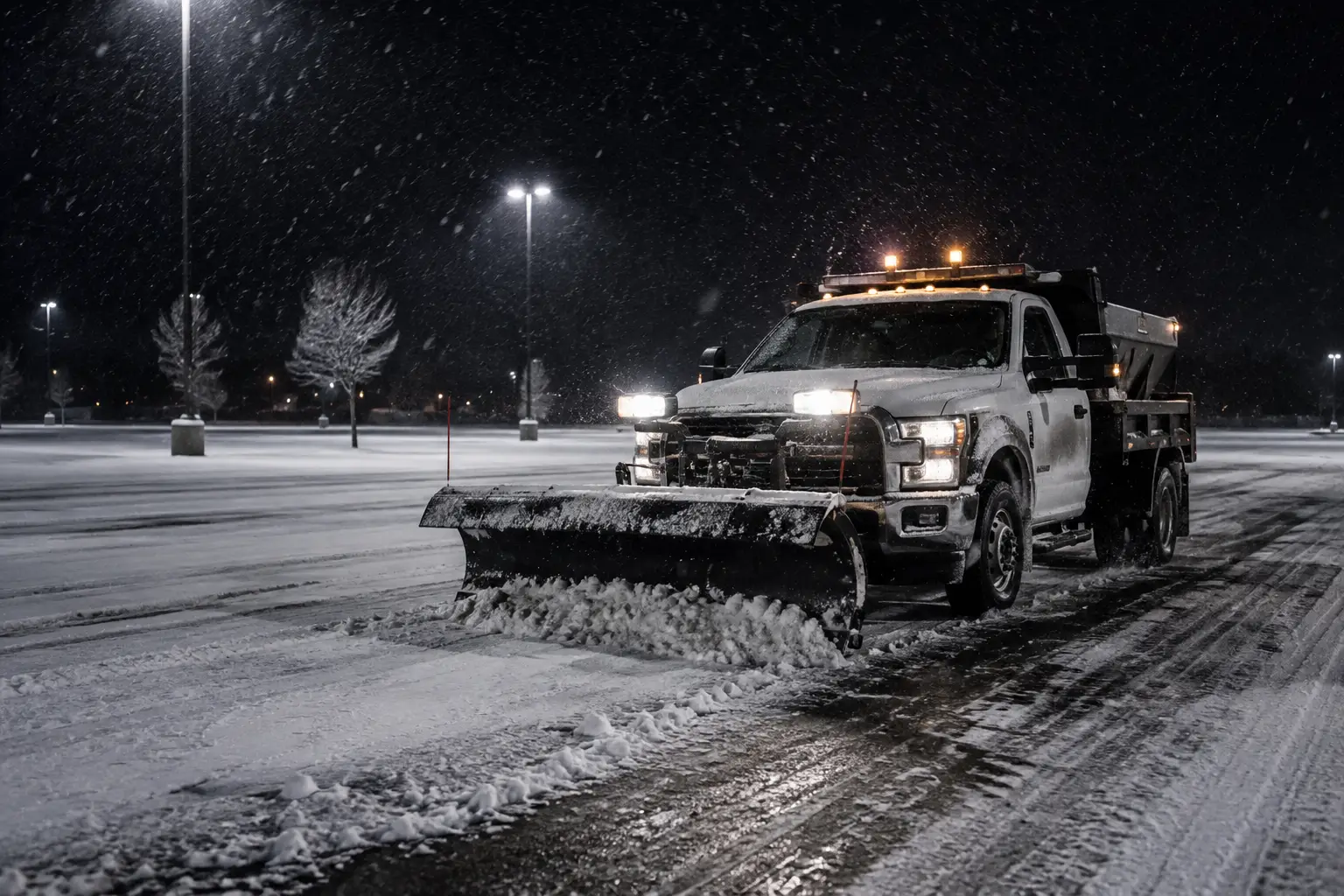
Every snow contractor eventually learns the same lesson: the plow doesn't decide whether the winter was profitable. The contract does. Two companies can service the same lots through the same storms, and one finishes March with a funded equipment budget while the other finishes with a stack of disputed invoices and a slip-and-fall letter. The difference was signed in September.
This guide walks through the contract structures the trade actually uses, who carries the weather risk in each one, the clauses that decide lawsuits, and how to price a season without betting the company on the forecast.
1. The Four Structures Every Snow Contract Falls Into
Nearly every snow agreement is one of four shapes, or a hybrid: per-push (billed each time you service, triggered at a contracted depth), per-inch or per-event (billed on depth tiers per storm), hourly (common on commercial with loaders and haul-off), and seasonal flat rate (one price for the whole winter, usually billed monthly). As one operator on PlowSite put it, the practical consensus is to "offer both, and do whichever the customer wants" — which means a real company runs several structures at once, across one account list, on the same storms.
2. Per-Push: You Get Paid When It Snows
Per-push is the cleanest alignment of work and money — "I just charge them for what I do for them, like any other job." The customer carries the weather risk: heavy winter, big bills; light winter, cheap season. It sells easily to budget-conscious residential and small commercial accounts, and in a low-snow market it protects your realized rate. The downsides are cash flow that disappears in a brown December and a subtle liability trap covered below: a contract that only activates at two inches leaves nobody responsible for the quarter-inch of freezing drizzle that puts someone on the pavement.
3. Seasonal Flat Rate: The Retainer That Funds the Fleet
The seasonal contract is the trade's business model. One price, November through April, usually billed in equal monthly installments — predictable revenue that finances trucks and salt before the first flake, plus comprehensive scope: monitoring, anti-icing, and priority response, not just plowing. Now the contractor carries the weather risk, and the operator wisdom is blunt: "if it snows a lot, contractor is unhappy; if it snows little, client doesn't feel like they got their money's worth." The fixes are structural — price on multi-year averages, cap the covered events or inches, and push multi-year terms so one brutal winter and one easy one net out.
4. Per-Inch Tiers, Caps, and Floors: The Hybrids That Keep Both Sides Honest
Most sophisticated commercial work lands between the extremes. Per-inch tiers (2–4", 4–8", 8"+) scale the invoice to the storm. Seasonal contracts with a cap ("up to 30 events; events beyond bill per-push") protect the contractor's downside. Per-push contracts with a monthly minimum protect cash flow through a dry December. And salt and de-icing deserve their own line: on per-push work it's typically billed per application, on seasonals it's built in — either way, the contract should say so explicitly, because material disputes are where March invoices go to die.
5. The Fine Print That Decides Lawsuits
There are more than 30,000 slip-and-fall claims a year against snow contractors and property owners in the US and Canada, and the contract is the first document every attorney reads. Watch for four things. First, hold-harmless and indemnification clauses — property managers routinely hand contractors agreements that shift all liability onto them, and contractors "often sign without reading." Several states (Illinois, Colorado, Connecticut) have passed laws voiding the worst of these, but in most states what you sign is what you own. Second, scope conflicts — a contract that makes you liable for site conditions while forbidding service until 2 inches accumulate is a trap; your trigger and your liability need to match. Third, a documentation clause — define what you record per visit (times, services, materials, photos) and that your records govern. Fourth, insurance requirements — commercial contracts specify CGL limits and certificates, and SIMA's insurance resources are the place to start; in some states carriers have fled snow coverage entirely, so your policy conversation should happen before your bid, not after the claim. Sample clause language is worth studying — Law Insider's snow removal clauses and operator-shared examples like this PlowSite damage waiver thread show how working contractors actually write it — then have a local attorney bless your template once.
6. Pricing the Season Without Betting the Company
Seasonal pricing is a weather bet, so price it like an actuary: pull your market's snowfall history from NOAA's climate normals, price against the multi-year average rather than last winter, and know your per-event cost cold — truck hours, sub payouts, and salt per application — so you know exactly how many events a seasonal price can absorb before it goes underwater. Insurance belongs in the price too: liability coverage for snow work costs real money, and underpricing it is how low bidders disappear by February. A useful discipline from insurers who write snow operations: your contract, your documentation practices, and your coverage get underwritten together — clean records literally make you more insurable.
7. The Whole Winter Is Sold in September
Commercial snow contracts are signed before the season — property managers lock vendors in September and October, and a lot missed in the fall is gone until spring. That makes late summer the sales season: quote site walks in August, get agreements signed in September, and have renewal conversations with existing accounts before their current term lapses. The contractors who grow are the ones whose renewal letters go out before the competitor's cold call comes in.
The Contract Is Only as Good as the Records Behind It
Every structure above ultimately rests on the same foundation: proof of what you did, when, at which site, with what materials. The per-push invoice, the seasonal cap count, and the slip-and-fall defense all come from the same per-visit record — and courts, as one industry attorney put it, "thrive on documentation."
That is software's job. Smart Service is snow removal software built around exactly that: storm routes dispatched by priority, time-stamped service records with photos and salt notes on every visit, and billing that follows each account's contract structure — per-push, per-inch, hourly, or seasonal — straight into QuickBooks. If you're structuring contracts for this winter, see how the operational side runs first. Get a free demo before the September signing window opens.


